
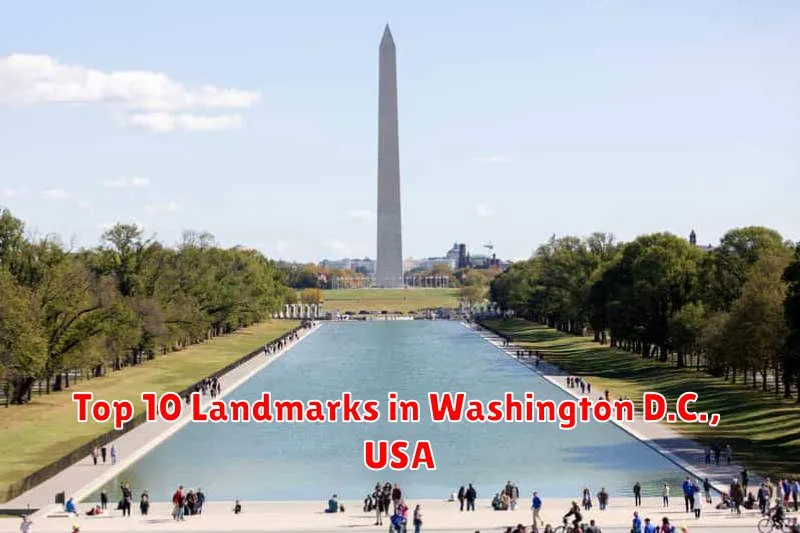
Washington D.C., the capital of the United States, is a city steeped in history and brimming with iconic landmarks. From monuments that symbolize American ideals to world-renowned museums and institutions, Washington D.C. offers a captivating journey through the nation’s past and present. This article will explore the top 10 landmarks in Washington D.C., providing a glimpse into the must-see destinations that define this powerful city. Whether you are a history buff, a political enthusiast, or simply seeking an unforgettable travel experience, Washington D.C.’s landmarks promise an enriching and inspiring visit.
Planning a trip to Washington D.C.? This guide to the top 10 landmarks in Washington D.C. will help you curate your perfect itinerary. Discover the essential sights, from the majestic Lincoln Memorial to the imposing United States Capitol Building. Explore the rich history and cultural significance of each landmark, and prepare to be awed by the architectural grandeur and symbolic power that permeates the city. This list of the top 10 Washington D.C. landmarks is your key to unlocking a memorable experience in the nation’s capital.
Lincoln Memorial

The Lincoln Memorial is a national monument built to honor the 16th president of the United States, Abraham Lincoln. It is located on the National Mall in Washington, D.C. and is one of the most visited sites in the city.
The memorial’s neoclassical design features a large seated statue of Lincoln, surrounded by 36 Doric columns, one for each state in the Union at the time of his death. Inscribed on the walls are Lincoln’s Second Inaugural Address and the Gettysburg Address.
The Lincoln Memorial is a powerful symbol of national unity and remembrance, offering visitors a place for reflection and contemplation on Lincoln’s legacy.
White House
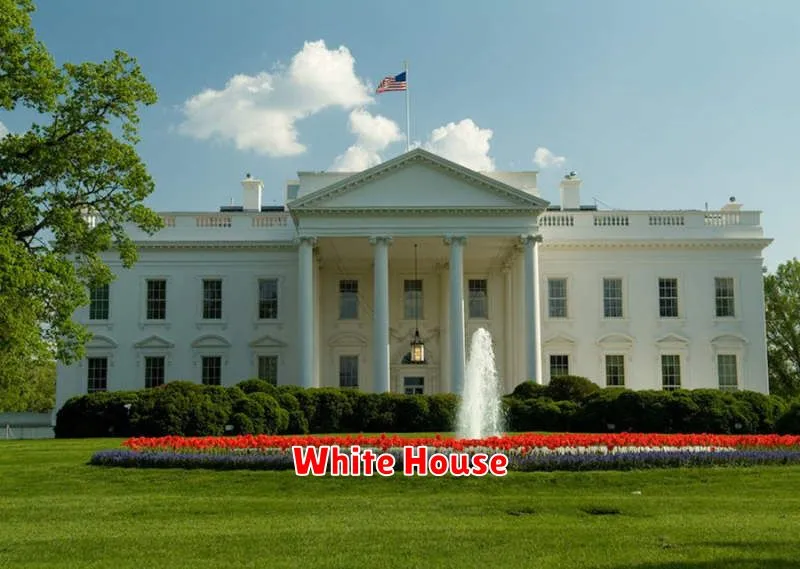
The White House serves as both residence and office of the President of the United States. Located at 1600 Pennsylvania Avenue NW, this iconic landmark has been home to every U.S. president since John Adams in 1800.
Designed by Irish-born architect James Hoban, its construction spanned from 1792 to 1800. The building’s exterior is Neoclassical in style, featuring a distinctive white façade. Throughout history, the White House has undergone several renovations and expansions, including the addition of the West Wing and Executive Residence.
Smithsonian National Museum
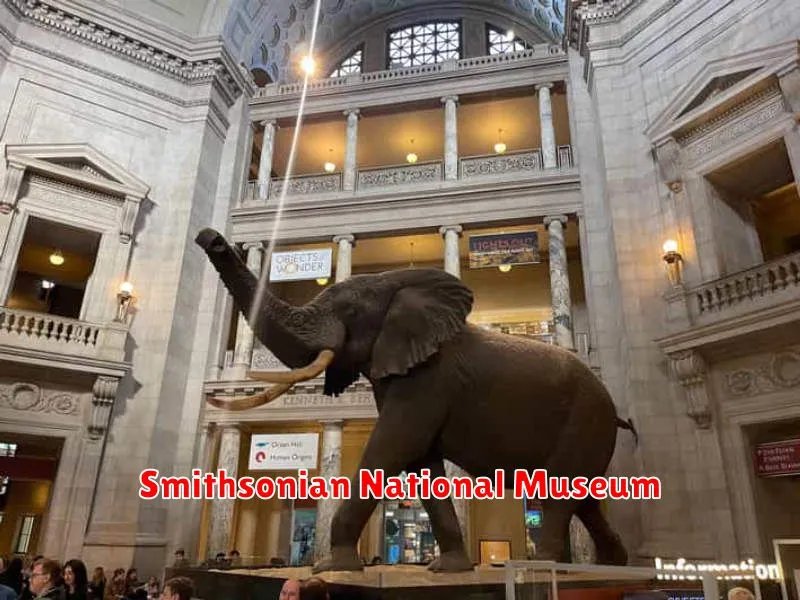
The Smithsonian National Museum is not one building, but a complex of 19 museums, galleries, and the National Zoological Park. Most of these are located on the National Mall in Washington, D.C., making it easily accessible to visitors. Entrance to almost all Smithsonian museums is free.
The museums cover a diverse range of topics, from art and history to science and space exploration. Some of the most popular include the National Air and Space Museum, the National Museum of Natural History, and the National Museum of American History. With so much to see, planning your visit in advance is highly recommended.
Washington Monument
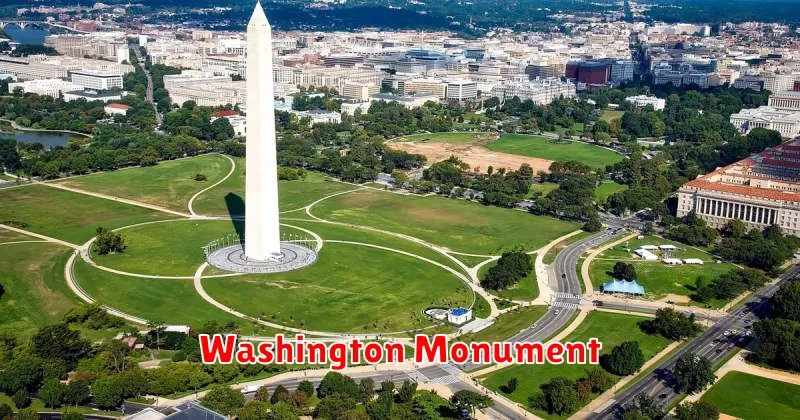
The Washington Monument is an obelisk on the National Mall in Washington, D.C., built to commemorate George Washington, once commander-in-chief of the Continental Army (1775–1784) in the American Revolutionary War and the first U.S. president.
Made of marble, granite, and bluestone gneiss, it is both the world’s tallest predominantly stone structure and the world’s tallest obelisk, standing 554 feet 7 11⁄32 inches (169.046 m) tall according to the U.S. National Geodetic Survey (measured 2013–14) or 555 feet 5 1⁄8 inches (169.294 m) high according to the National Park Service (measured 1884). It is the tallest structure in Washington, D.C. and was the tallest structure in the world from its completion in 1884 until the Eiffel Tower was built in 1889.
National Mall
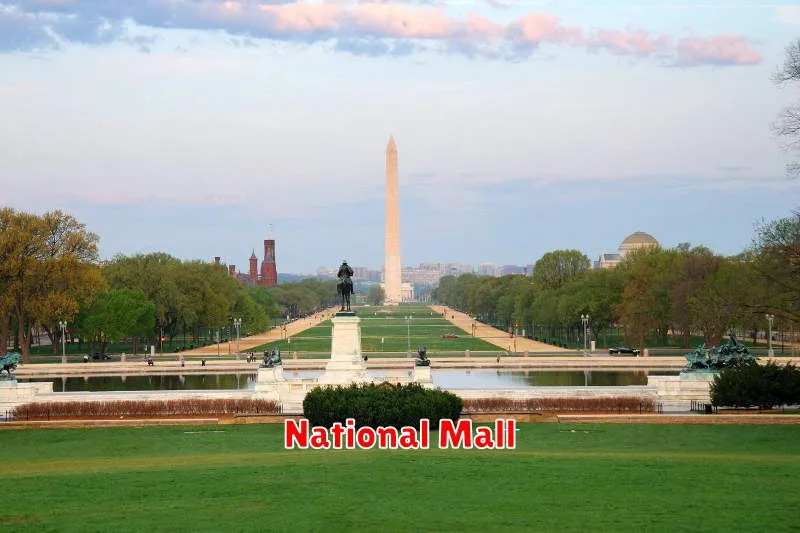
The National Mall is a large, open park in the heart of Washington, D.C. Stretching over two miles, it connects the U.S. Capitol Building to the Lincoln Memorial and is bordered by iconic museums and monuments.
Visitors can experience American history and culture firsthand as they walk the grounds. The Mall hosts numerous events throughout the year, including the National Independence Day celebration. It offers vast green spaces for recreation and reflection, making it a must-visit destination for any visitor to the nation’s capital.
U.S. Capitol Building
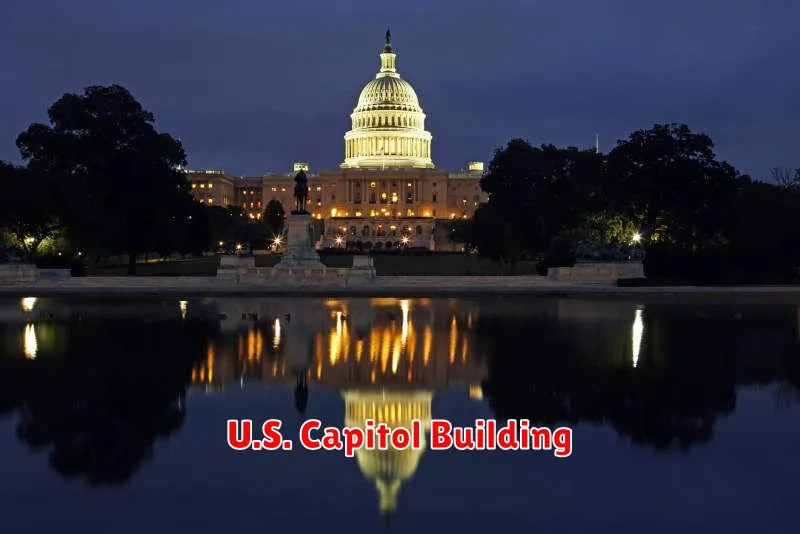
The U.S. Capitol Building serves as the meeting place for the United States Congress, the legislative branch of the U.S. federal government. Located in Washington, D.C., it is a symbol of American democracy and a prominent landmark.
The building’s iconic neoclassical architecture features a large dome and two wings, housing the Senate and the House of Representatives. Construction began in 1793, and although the building has undergone expansions and renovations throughout its history, it remains a testament to American history and governance.
National Gallery of Art
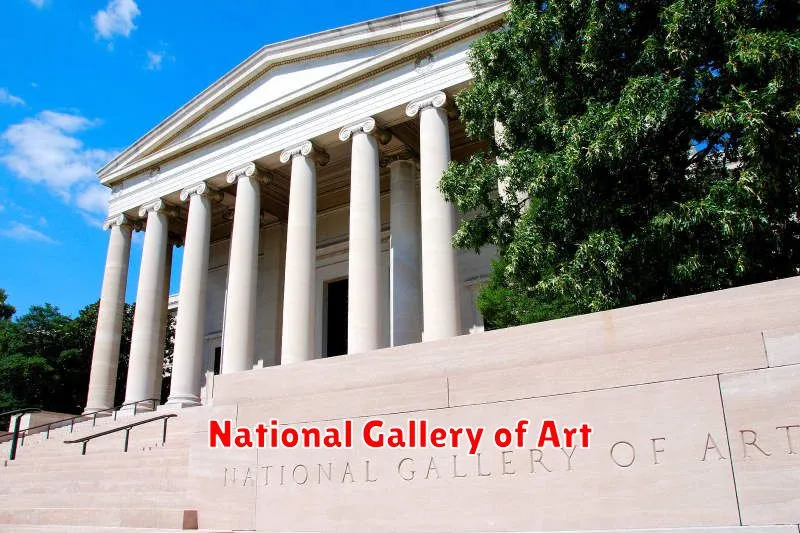
The National Gallery of Art is a premier art museum located on the National Mall in Washington, D.C. It boasts a comprehensive collection spanning artistic movements from the Middle Ages to the present day.
Visitors can admire masterpieces of European and American painting, sculpture, and decorative arts. The museum’s collection includes works by renowned artists such as Leonardo da Vinci, Rembrandt, Monet, and Van Gogh.
The National Gallery of Art is free to the public and offers a range of educational programs and resources.
Martin Luther King, Jr. Memorial

Dedicated in 2011, the Martin Luther King, Jr. Memorial is a poignant tribute to the life and legacy of the civil rights leader. Located on the National Mall, the memorial features a 30-foot-tall granite sculpture of Dr. King known as the “Stone of Hope.”
This powerful sculpture depicts Dr. King emerging from the “Mountain of Despair,” symbolizing his unwavering commitment to equality and justice. Inscribed on the memorial are some of Dr. King’s most inspiring quotations, reminding visitors of his message of hope and nonviolent resistance.
Arlington National Cemetery
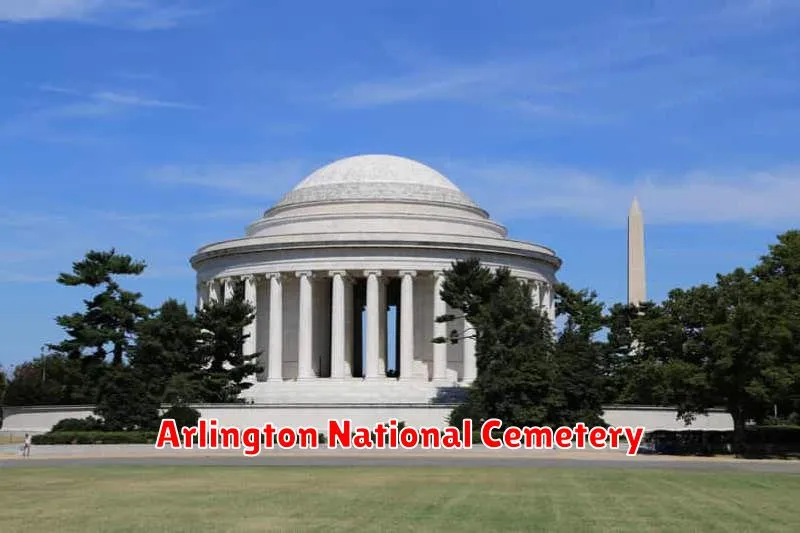
Arlington National Cemetery stands as a powerful tribute to American history and the sacrifice of its armed forces. Located across the Potomac River from Washington, D.C., this hallowed ground serves as the final resting place for more than 400,000 individuals, including veterans from every American conflict, from the Revolutionary War to present day.
Visitors can witness the solemn Changing of the Guard ceremony at the Tomb of the Unknown Soldier, a moving tribute to unidentified service members. Arlington House, The Robert E. Lee Memorial, offers a glimpse into pre-Civil War life and the complex history of the site, once the home of Confederate General Robert E. Lee.
The cemetery grounds are meticulously maintained, featuring rolling hills, monuments, and memorials commemorating significant events and individuals. The cemetery is a place for quiet reflection and a powerful reminder of the cost of freedom.
Jefferson Memorial
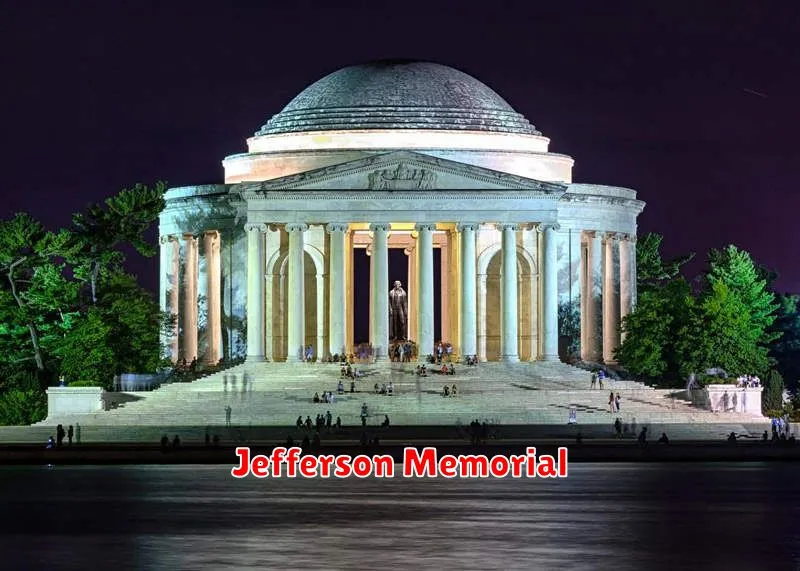
The Jefferson Memorial is a neoclassical monument honoring Thomas Jefferson, the third President of the United States. Located on the Tidal Basin, its design, reminiscent of the Pantheon, features a circular colonnade surrounding a statue of Jefferson.
Visitors can explore the memorial’s interior, admiring the inscriptions of Jefferson’s writings and enjoying panoramic views. It serves as a powerful tribute to Jefferson’s contributions to American democracy.
Key features include:
- Bronze statue of Thomas Jefferson
- Inscriptions of Jeffersonian writings
- Open-air design offering scenic views
- Steps and ramps providing accessibility
